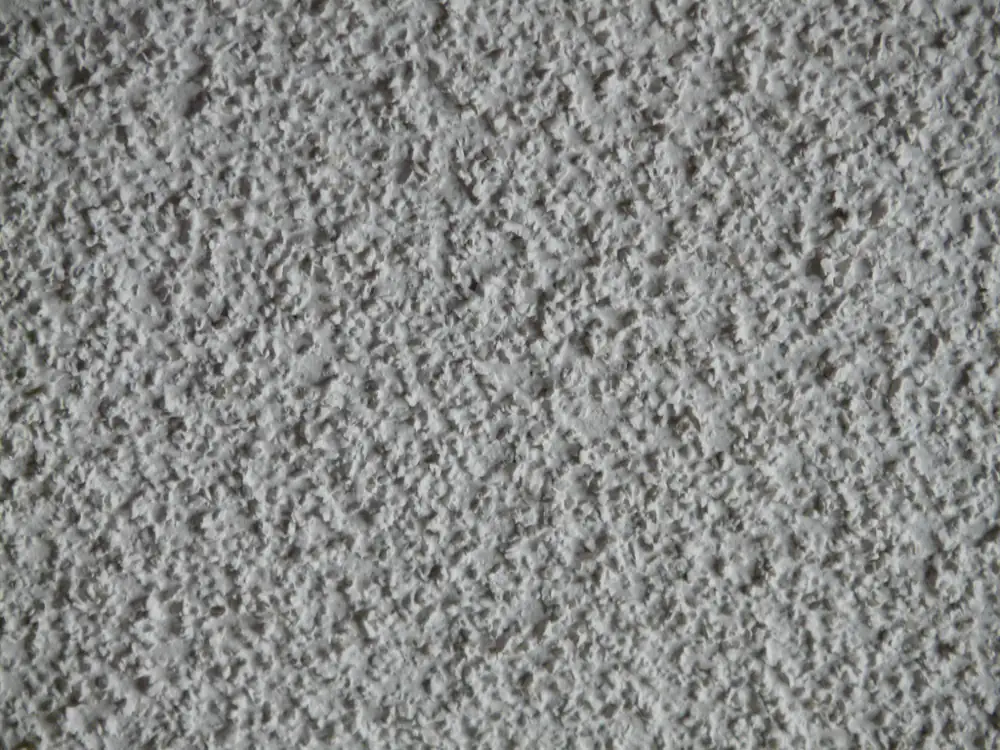
Step by Step
- Asbestos check. For homes built before the mid-1980s, a sample is lab-tested first. If it’s positive, stop. This becomes an abatement job. See asbestos testing.
- Clear and protect. Furniture is moved out or to the center and covered. Floors get plastic sheeting, often with paper or board over it. Walls are covered in plastic from ceiling to floor. Outlets, vents and light fixtures are taped off.
- HVAC off, vents sealed. This keeps dust out of the ductwork and the rest of the house.
- Wet and scrape. Unpainted texture is misted with water, allowed to soak a few minutes, then scraped off with a wide blade. Wetting keeps dust down and makes it come off cleanly.
- Bag and haul. The wet debris is rolled up in the floor plastic and bagged.
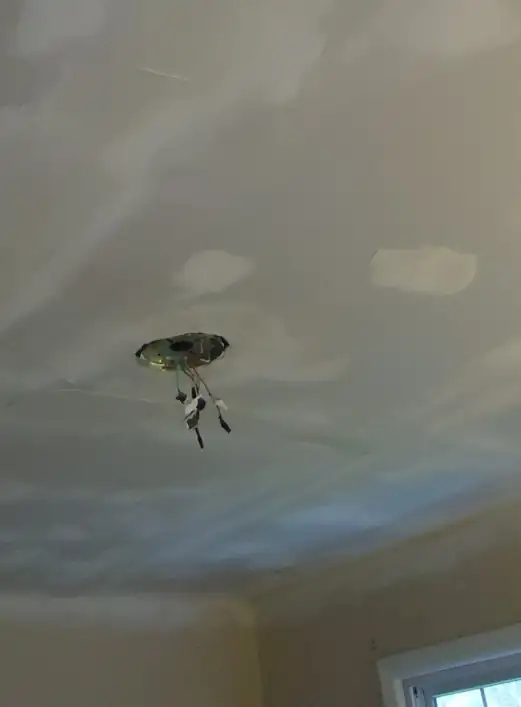
- Repair. Scraping exposes nail pops, loose tape, gouges and old water damage. These are fixed before finishing.
- Finish. The ceiling is skim-coated smooth or retextured, then primed and painted. See smooth finish and retexture options.
Whole House vs. One Room
On a whole-house job, crews usually work through the house in sections: seal off a group of rooms, scrape, repair and finish them, then move on. That keeps part of the house usable and the dust contained. Ask for the order of rooms and which days each section will be closed off. For a single room the steps are the same, just compressed into a day or two plus drying time.
When the Popcorn Has Been Painted
Paint seals the texture, so water can’t soften it. Contractors usually handle it one of three ways:
| Approach | How it works | Trade-offs |
|---|---|---|
| Dry or chemical-assisted scraping | Scrape harder, sometimes with a product to break down the paint | Slower, more dust, more drywall damage to repair |
| Skim over it | Knock down the high points, then skim-coat joint compound over the top | Adds weight, needs a well-bonded texture underneath |
| Cover it | Install thin (often 1/4″) drywall over the old ceiling | Most predictable finish. More material, and fixtures need extending |
If the home was built before 1978, the paint on the ceiling may contain lead. Federal EPA rules require contractors who disturb painted surfaces in pre-1978 homes to be lead-safe certified. Ask about it.
Things That Affect the Job in Broken Arrow Homes
- Vaulted and two-story ceilings. Common in many 1980s–90s Broken Arrow floor plans. They need scaffolding or tall ladders and usually cost more per square foot.
- Old storm damage. Past roof leaks often leave stains or soft drywall under the texture. Water-damaged sections may need replacing, not just finishing.
- Humidity. Joint compound dries slower in humid Oklahoma summers. Drying time between coats can stretch the schedule. Running the AC once the vents are uncovered helps.
- Ceiling fans and can lights. Fixtures are usually removed or dropped. Ask whether reinstalling them is included.
Should I Do It Myself?
We don’t recommend it, and we can’t tell you it’s safe. Whether it’s safe depends on what’s in the ceiling, and only a lab test can tell you that. In Oklahoma, asbestos abatement work is licensed through the Oklahoma Department of Labor, so check its rules before anyone disturbs a ceiling that might contain asbestos. Even when testing is negative, a whole house means days of wet, overhead scraping on ladders, and getting the ceiling finished well afterward is skilled work. Get the ceiling tested and talk to licensed professionals before deciding.
Next: what it costs and how to compare quotes.
Request a Popcorn Ceiling Quote
Tell us about the house. A local Broken Arrow-area ceiling company will call or text you back to set up a walkthrough and estimate.
Please note: Broken Arrow Popcorn Removal connects homeowners with independent local ceiling contractors. We are not a contractor and do not do the work.